


Our services on batteries impacts
Carbon footprint
TheCarbon footprint or Carbon Footprint will be required for the battery Digital Product Passport (DPP) and is also a good indicator for comparison with internal combustion engine vehicles. Do you know the impact of your battery? Measure it with us!
How to measure it? Based on the principles of’Life Cycle Assessment (LCA), which offers a comprehensive view of the impact of a product or process, the entire life cycle must be taken into account, from raw material extraction to end-of-life. It measures greenhouse gas (GHG) emissions generated in kilogrammes of CO2 equivalent (kgCO2eq) and applies just as much to the creation of new generations of batteries as to the optimisation of existing technologies and recycling processes and
LCA incorporates several dimensions to identify the most effective levers for improvement: LCA environmental, analysis of costs (LCCA) and Life Cycle Assessment (LCA). Social (ASCV). Together, they offer a a reliable overview to support more sustainable decisions.
You need it for
Our support
Drawing on its experience since 2017, WeLOOP is a life cycle assessment (LCA) consultancy. The BATTERS team supports you with your projects through the various stages of LCA and the carbon footprint of your batteries with our mastery of CFF:
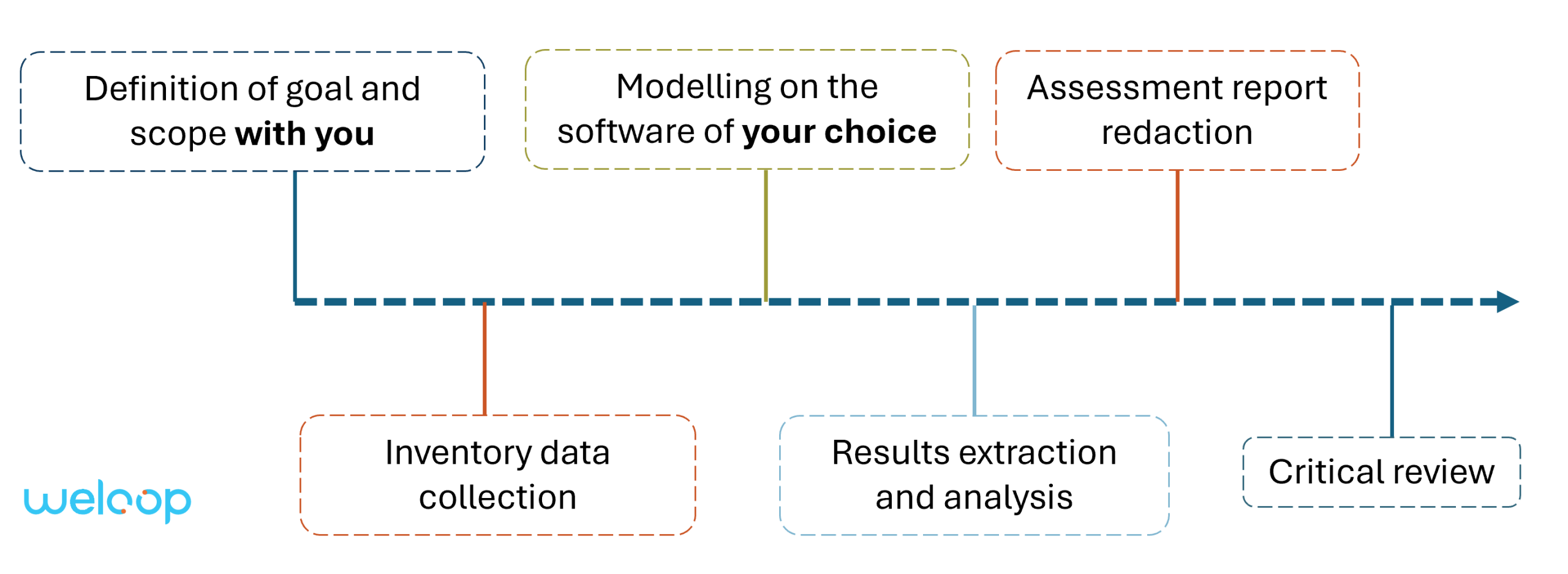
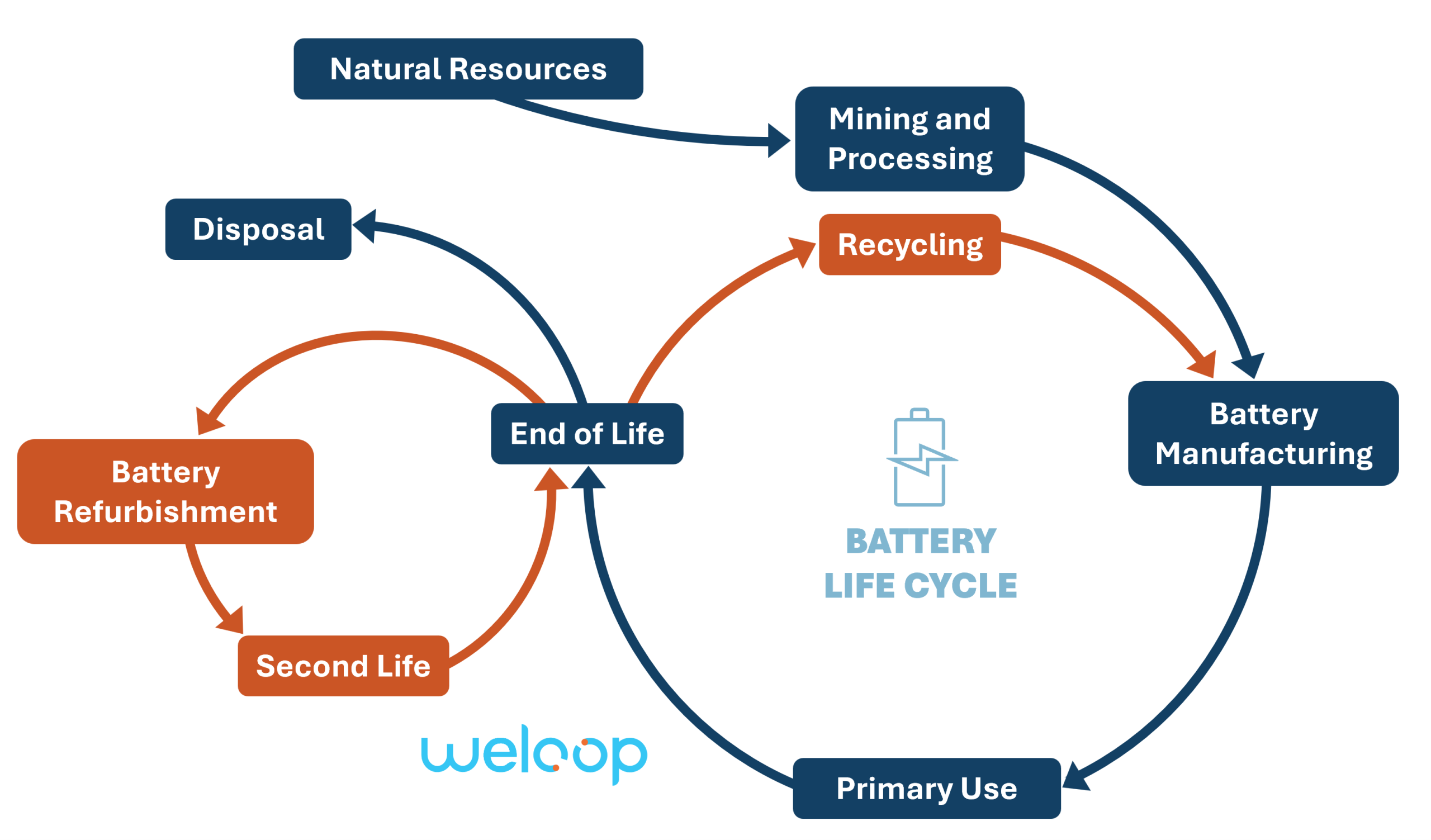
Inventory development
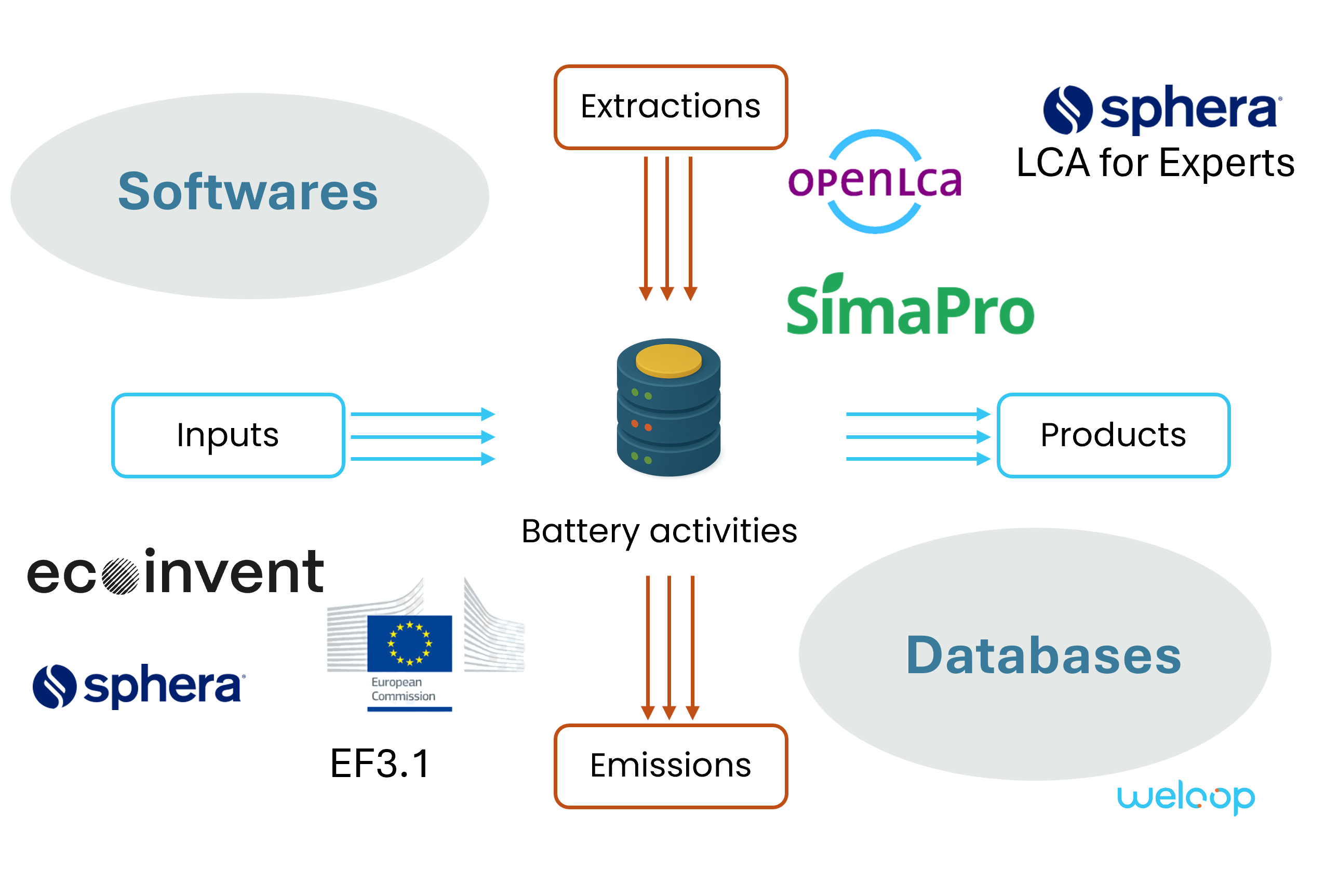
Life Cycle Inventories (LCIs) are the foundation for a precise and reliable carbon footprint or LCA and are essential for the DPP in justifying the presence of critical materials and hazardous substances.
By developing CVIs complete and up-to-date, This makes it possible to better understand the flow of materials, energy and emissions. The result is more robust analyses of the impact of batteries, and more sustainable decisions that are perfectly adapted to the needs of our customers. aligned with environmental issues current.
You need it for
Our support
We also offer co-development of specific LCIs to your products, processes and services, compatible with the impact analysis software of your choice.
As part of its projects, WeLOOP has developed a parameterised database grouping together ICVs from recycling lithium-ion batteries, as well as the associated recycled materials. The LCI datasets from this database are available for purchase upon request
Critical review of carbon footprint studies
The critical review of a carbon footprint or LCA is an independent evaluation process aimed at verifying the robustness, transparency and credibility of an analysis. It includes the verification process, involving checking the data, assumptions, methodological choices and results.
This approach ensures that the results are reliable and comply with international standards (e.g. ISO 14040/14044), thereby strengthening the confidence of stakeholders and the strategic value of LCA.
You need it for
Our support
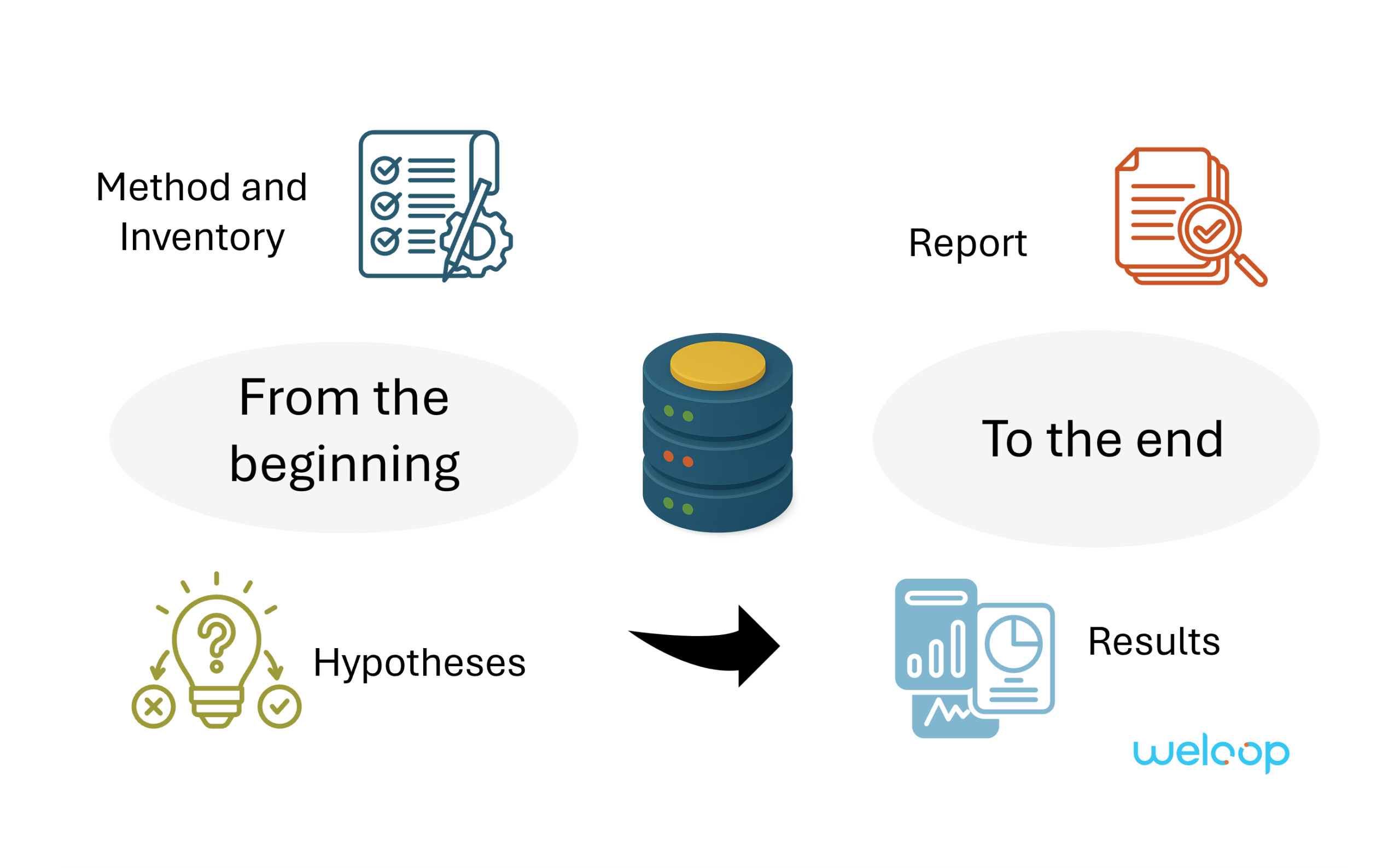
We make critical review an integral part of your battery LCA projects at different stages:
Help with funding applications and calls for tenders
The environmental dimension is becoming a key criterion in funding applications and calls for projects. Funding bodies and those issuing tenders are increasingly seeking to support sustainable, responsible initiatives with a low ecological impact.
Integrating this dimension as soon as files are prepared allows promote your commitments credibility and appeal of your projects.
You need it for
Our support
From drafting quotes to writing reports, we offer concrete and operational support to promote your sustainable initiatives and maximise your chances of success
We support our partners at every stage in order to effectively meet the requirements of funding or calls for projects.

European funding and projects (Innovation Funds, HORIZON, erc, interreg)

National funding and projects (ADEME, anr)

Regional funding and projects (AMI)
Eco-design
Eco-design consists of creating products by integrating sustainability aspects from the design phase or during the redesign phase of a product or service. This approach also applies to end-of-life and therefore to recycling processes, by improving efficiency, reducing energy consumption and limiting emissions or residues.
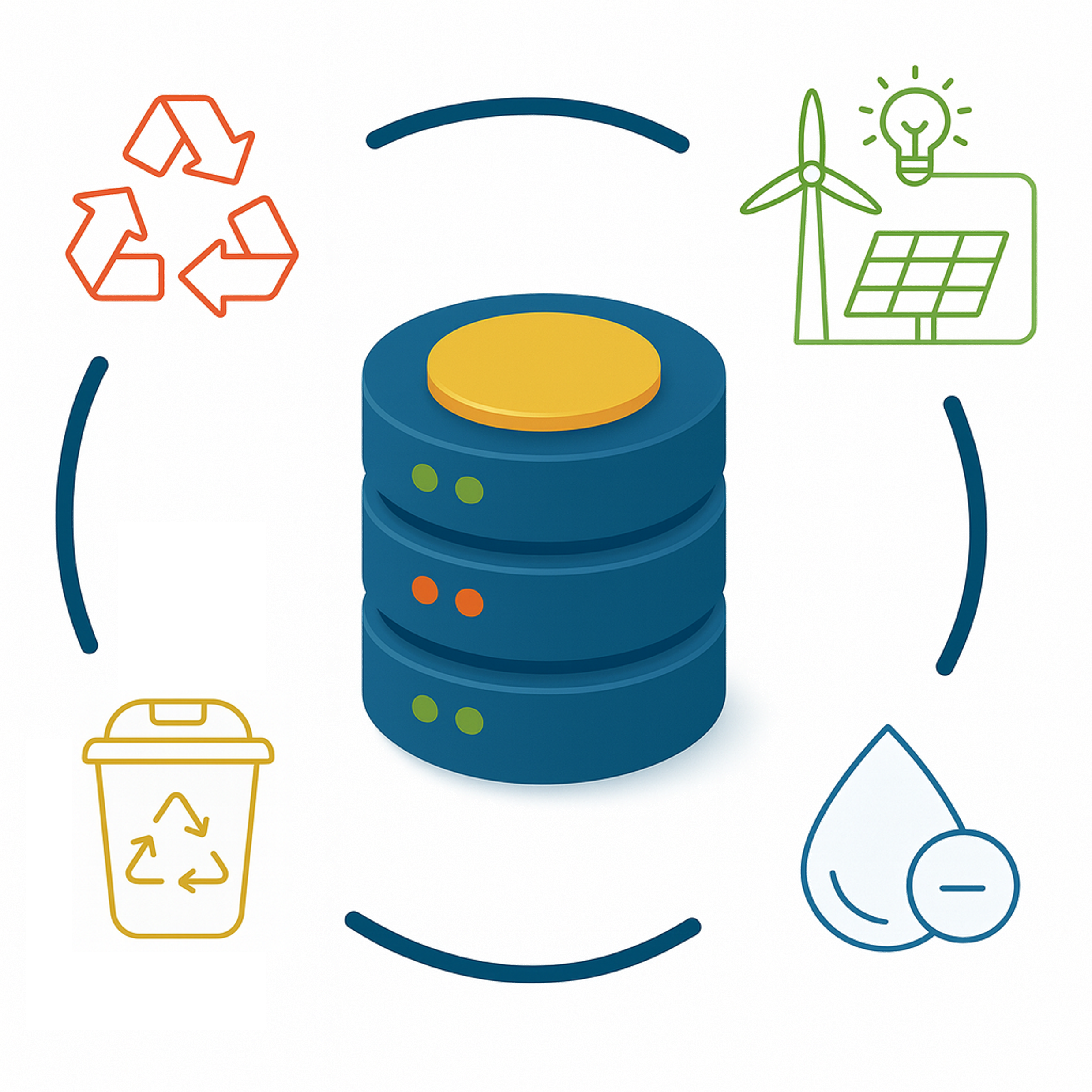
The impacts of batteries can indeed be reduced throughout the life cycle, from the choice of materials to end-of-life. This approach makes it possible to optimise manufacturing, energy, use and recycling, while remaining realistic about economic and social aspects. It enables the development of battery systems and value chains that are more efficient, more responsible and better suited to the challenges of the energy transition.
You need it for
Our support
We organise co-creation sessions with all the stakeholders concerned. These collaborative workshops help you to integrate the values and objectives of eco-design into your organisation.
With theincorporation of impacts of batteries in our eco-design approach, we are developing with you one or more detailed action plans with eco-design solutions. We can also help you to prioritising actions to implement.
Criticality of materials
The criticality assessments are used to identify critical materials in products. To do this, they analyse both the’importance of a material for industry and associated risks and provides solutions for risk mitigation.
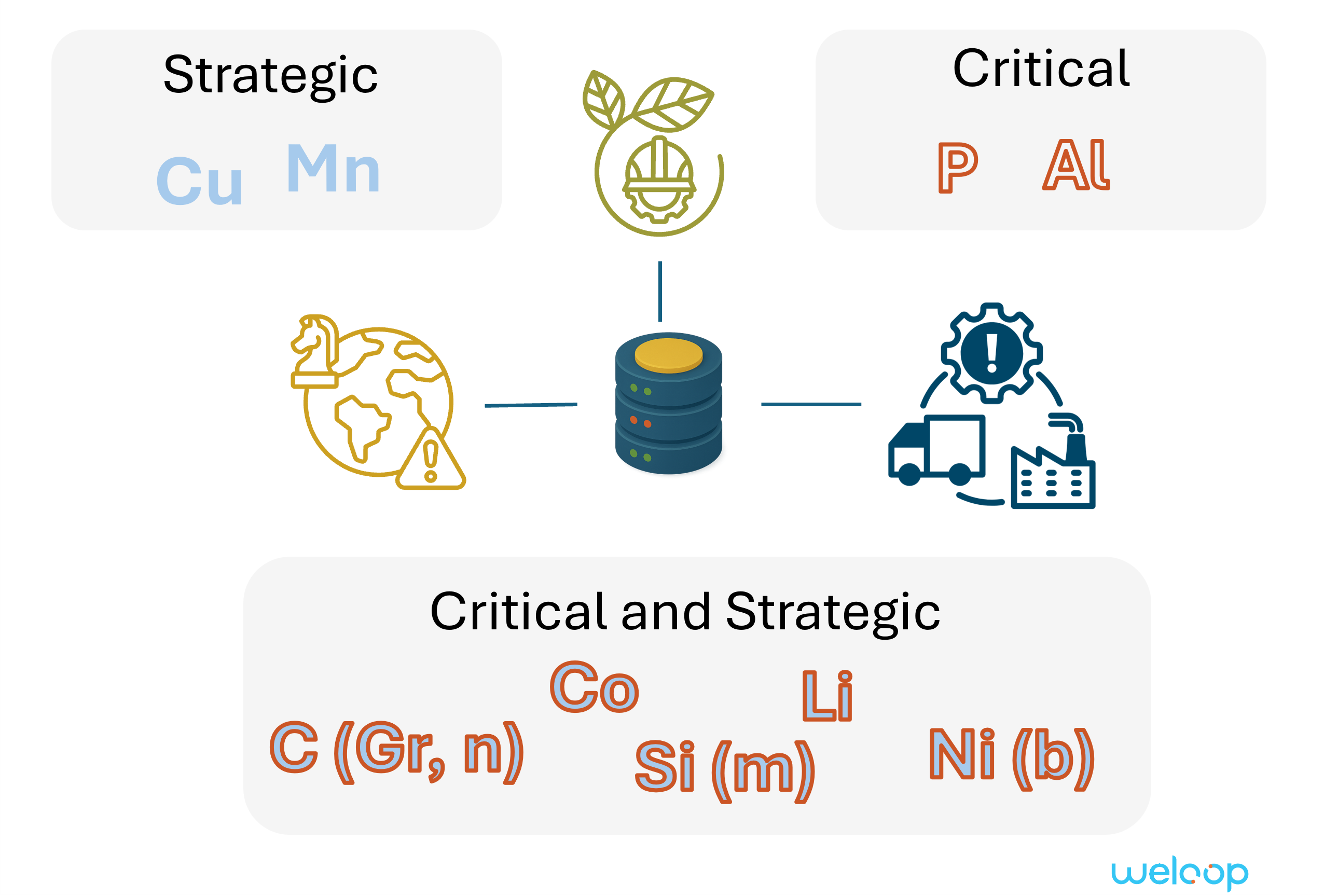
A critical material is a material that is essential to the economy or to a specific technology, but whose supply is deemed to be at risk due to factors linked to its availability, whether geopolitical, economic or environmental. These materials are strategic for sectors such as energy, aerospace and batteries. The European Commission publishes the list of critical and strategic materials for the European Union.
You need it for
ACV and Criticality: Compatible?
In an article published in 2026 by Springer in the book « Life Cycle Management from Global to Local » with ScoreLCA, BRGM and the University of Bordeaux, we explored the Links between Life Cycle Assessment (LCA) and raw material criticality assessment. Drawing on case studies of batteries, this work highlights the complementarities between environmental performance and supply chain challenges.
Our results show the benefit of a cross-approach To inform decision-making, integrating both environmental impacts and resource-related risks. This article concretely illustrates how these two frameworks can be mobilised coherently in industrial contexts.
Our support
Our studies will enable you toidentify the safest and most suitable materials for your technologies, identify and anticipate stresses on resources, and by anticipate the risks in a standalone or combined approach with LCA.
In batteries, criticality of materials is a strategic issue. Lithium, nickel, cobalt and manganese all present risks and opportunities in terms of availability, performance and environmental impact.

They trust us











You are interested in
Our services
Do you want to understand the environmental, social or economic impact of your batteries? Do you want to implement eco-design initiatives?
Join the BATTERS ecosystem
Companies, researchers, institutions - would you like to help build a more sustainable and connected European battery industry? Would you like to stay informed about our initiatives?